
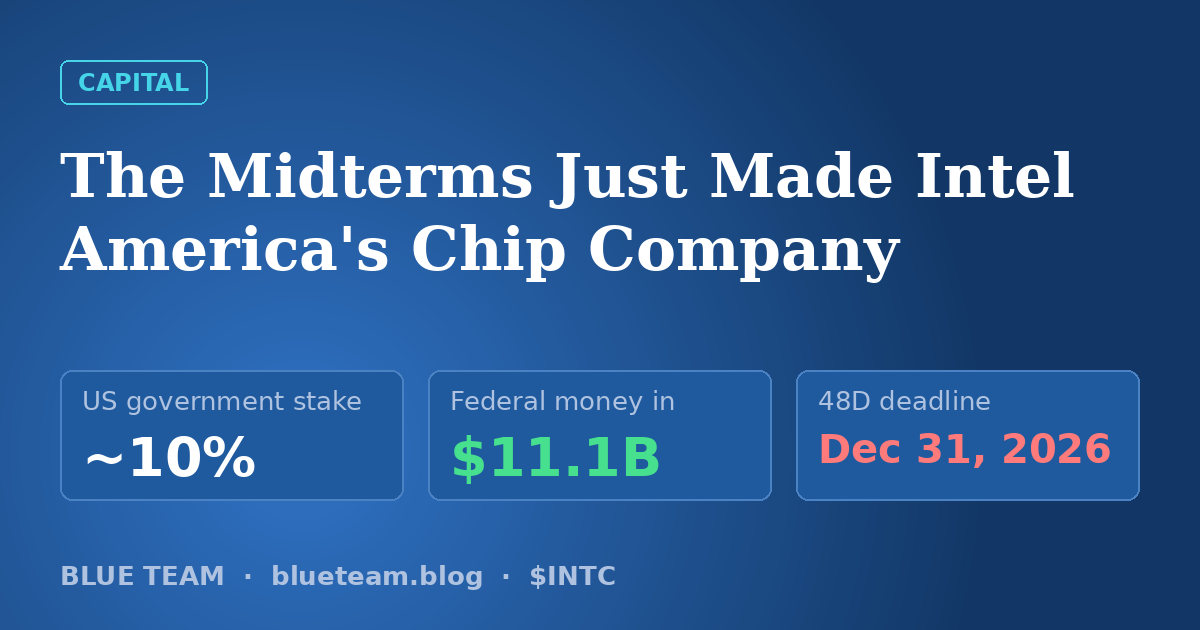
Washington has $11.1 billion and a 10% stake riding on Intel. After November 3, both parties have a reason to see it through.
On November 3, Democrats won both chambers of Congress. President Trump keeps the White House. Most investors will read that as gridlock.
For Intel, it is the opposite. Washington has put $11.1 billion into Intel and owns about 10% of the company. After this election, both parties hold power, and both are invested in the same outcome.
Where the money came from
The story starts with the CHIPS Act. In March 2024, the Commerce Department offered Intel a preliminary deal:
- $8.5 billion in grants
- Up to $11 billion in loans
- A 25% investment tax credit on more than $100 billion of US spending over five years
The plan covered four states:
- Arizona: two new leading-edge fabs for 18A.
- New Mexico: two older fabs converted to advanced packaging.
- Ohio: two new leading-edge fabs on a greenfield site.
- Oregon: expansion of Intel’s development fabs, including the first High-NA EUV tools.
In November 2024, the award was finalized at up to $7.86 billion. It was smaller because $3 billion moved to Secure Enclave, a separate defense contract to make trusted chips for the military. Payments depended on construction milestones.
In August 2025 the deal changed shape. Intel had received $2.2 billion in grants. The remaining $5.7 billion of CHIPS money and $3.2 billion of Secure Enclave money became equity: $8.9 billion for Intel shares at $20.47. That gave the government about 9.9% of Intel and made it Intel’s largest shareholder. The stake is passive, with no board seat and no say in how Intel votes. The government also holds a five-year warrant for another 5%, usable only if Intel ever owns less than 51% of its foundry.
In total, Washington has put $11.1 billion into Intel. No other chip company has that.
Why the election helps

Divided government usually means gridlock. On Intel, the two sides agree.
- Democrats wrote the CHIPS Act. They want the factories finished and the jobs delivered in their states.
- Republicans, under President Trump, turned the grants into ownership. They want an American answer to TSMC.
- Both now share a 10% stake. A Congress that owns part of Intel through the Treasury has every reason to protect it.
The deadline that matters most
The advanced manufacturing tax credit, known as 48D, was raised from 25% to 35% in July 2025. But it applies only to fabs that start construction before December 31, 2026. Starting can mean real physical work on site, or having paid at least 5% of the project’s cost.
The new Congress takes office in January 2027, after that deadline.
- Intel’s existing projects are safe. Ohio has been under construction since 2022, and Arizona’s fabs are already being built or equipped.
- New projects are not. That includes the next Oregon fab, new Arizona phases and Terafab itself.
- The bull case needs an extension, either in the lame-duck session before January or in a 2027 bill that reaches back to cover projects started later.
- Both parties support domestic fabs, so an extension is likely. Most of America’s planned chip investment depends on it.
Arizona: the proof
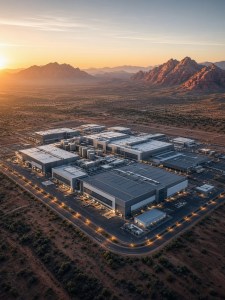
- Fab 52 at Ocotillo has run 18A in high volume since October 2025, with capacity for more than 10,000 wafer starts a week.
- 18A yields rose at a double-digit rate in Q3 and, in Intel’s words, continue “their upward trajectory to industry-standard levels ahead of our internal projections.” 18A wafer costs have fallen about 40% since Q1.
- 18A went from under 5% of Intel’s client CPU revenue in Q1 to nearly one-third in Q3. Wildcat Lake units rose about 70% and are sold out.
- 18A-P launches by year-end. Outside customers testing it are, in Lip-Bu Tan’s words, “very pleased with the yield.”
- Fab 62 is next. Intel says construction and tool installation are “now fully underway” and expects operations “to begin by the end of 2028.”
Bull view: Arizona is where the CHIPS money already shows up as working silicon. It is also the fastest place Intel could offer Elon Musk 14A wafers.
Oregon: where 14A is born
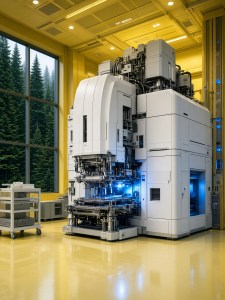
- D1X in Hillsboro is Intel’s leading-edge development fab and holds the world’s first production High-NA EUV tools.
- The 14A version 0.9 design kit reached customers in October, “meeting industry standard yield and performance criteria at release.” Version 1.0 follows by Q1 2027.
- 14A risk production starts in 2027. Tan expects “a couple” of 14A customers ready to announce within two quarters.
- Oregon’s own CHIPS Act gave Intel $90 million in 2023, the program’s first award. Intel employs more than 22,000 people in the state.
Bull view: Every future Intel node, and every Terafab chip, starts in Hillsboro. A 48D extension would make the next Oregon fab much cheaper.
New Mexico: the packaging edge

- Fab 9 in Rio Rancho opened in January 2024 after a $3.5 billion conversion. It is the only high-volume Foveros 3D packaging site in the United States.
- About $500 million of CHIPS funding went to modernizing the campus.
- Intel’s packages are already 8 times the size limit of a standard chip, heading to more than 12 times by 2028.
- Intel says some customers come to it for packaging first.
Bull view: AI chips are becoming stacks of chiplets, and packaging is one of the bottlenecks capping Xeon supply. New Mexico gives Intel a domestic advantage TSMC cannot match on US soil today.
Ohio: back on the move
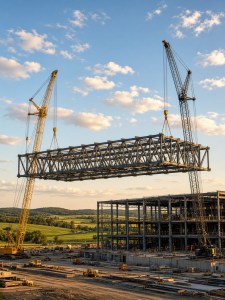
On October 21, Intel announced that “the first major structural truss has been installed on the first fab in New Albany,” calling it “another significant step toward expanded U.S. leading-edge semiconductor capacity, a visible reminder that the future of American manufacturing is being built today.”
- The steel is going up on time. In its March report to the state, Intel kept its 2030 target for the first fab and 2031 for the second, with no new delay.
- Intel spent more than $1.53 billion in Ohio in 2025, bringing its total to $5.26 billion.
- Ohio One is designated for 14A and has room for up to eight fabs. Intel says it can accelerate if customers demand it.
- Ohio’s own package from 2022 totals about $2 billion: a $600 million onshoring grant, $691 million for roads and water, a $650 million job-creation tax credit and up to $150 million from JobsOhio. Most of it is paid only when Intel hits its targets.
Bull view: Ohio is where a 14A customer turns into fabs. It is already under construction, so it is protected by the 48D deadline. With 14A risk production starting in 2027 and the first customers expected within two quarters, Ohio has a real chance of being brought forward.
Texas: the customer
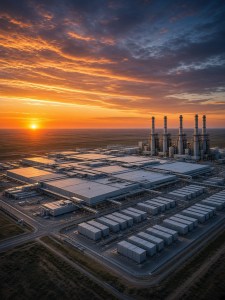
- Terafab: On August 6, Texas announced SpaceX’s $16.8 billion first phase in Grimes County, a planned 100-million-square-foot plant with 3,000 jobs and a $30 million Texas Enterprise Fund grant. State filings describe up to $119 billion over four phases.
- Intel’s role: Intel joined in April as Terafab’s first named partner, to help design, make and package chips. Musk has said Terafab will use Intel 14A.
- The rival: Musk confirmed talks with TSMC in October. Tan says Intel is staying in.
- The decision is close: Tan says 14A customers will commit from the second half of 2026 into the first half of 2027.
- The election: Texas elected a Democratic senator and governor for the first time in decades. James Talarico beat Ken Paxton, and Gina Hinojosa unseated Greg Abbott. The county deal and state grant are signed. No Texas leader of either party will turn away a project this size.
- The deadline: Terafab needs to break ground before December 31 to lock in the 35% credit. Otherwise it needs the extension too.
Bull view: If Terafab signs for 14A, Intel’s foundry gets the anchor customer the CHIPS Act was meant to attract. Arizona supplies first, Ohio scales up, New Mexico packages and Oregon develops.
How the states fit together
| State | Role | Status | What the bull case needs |
|---|---|---|---|
| Oregon | Develops every process | 14A design kit with customers | 14A risk production in 2027 |
| Arizona | Makes 18A today | Fab 52 in volume, Fab 62 by end 2028 | 18A yields at industry standard |
| New Mexico | Packages AI chips | Fab 9 running | More packaging for Xeon and outside customers |
| Ohio | Future 14A scale | Steel going up, 2030 to 2032 | A 14A customer to bring it forward |
| Texas | The customer | Terafab phase 1 committed | A binding 14A contract |
The bull path
| When | What happens | What it means for Intel |
|---|---|---|
| By end of 2026 | 18A-P launches; 48D extension debated; 14A customer decisions begin | Lower cost for every new fab |
| First half of 2027 | 14A version 1.0 design kit; first 14A customers announced | Foundry gets its anchor customer |
| 2027 | 14A risk production; server supply improves | 14A proven on real silicon |
| 2028 to 2030 | 14A in volume; Fab 62 running; Ohio comes online | Intel is rerated as America’s foundry |
The verdict

The CHIPS Act was built for exactly one kind of company: an American firm that can make leading-edge chips in America. That company is Intel.
Democrats wrote the grants. Republicans turned them into ownership. The election gave both parties a share of power, and both are invested in the same outcome.
Washington has done its part. The next step is Intel’s: 14A on time and a signature from Musk.
Related reading: Intel took back PC market share in Q3 · Tick-tock is back · Intel Q3 2026 earnings · Our thesis on Intel
Sources: Commerce Department and Intel, March 20 and November 26, 2024; US government equity agreement with Intel, August 2025; Holland & Knight on Section 48D, October 2026; Intel Q3 2026 earnings call, October 29, 2026; Intel newsroom, October 21, 2026; Intel report to the Ohio Department of Development, March 2026; Ohio Department of Development, 2022; Oregon governor’s office, 2023; Office of the Texas Governor, August 6, 2026; Tom’s Hardware Intel fab roadmap, June 2026; AP and network election coverage, November 3 to 4, 2026. Not investment advice.


Leave a Reply